
A few knots do not always look urgent.
That is why matting gets underestimated.
From the outside, it can seem like a grooming problem. A messy coat. A little tangling. Maybe something to “deal with later.”
But Matting does not always stay small.
It can tighten. It can pull on the skin. It can trap moisture, dirt, and debris close to the body. And once that happens, comfort drops fast. In more serious cases, irritated skin under heavy mats can create the kind of conditions where bigger problems start.
Can matted dog hair cause skin problems? Yes. Matted hair can pull tightly on the skin, trap moisture and debris, reduce airflow, and make irritation worse. Severe mats do not automatically mean infection, but they can raise the risk of skin damage and create conditions that may lead to more serious skin trouble if ignored.
That is why this matters.
Not because every tangle is an emergency.
But because waiting too long can turn a preventable coat issue into a painful one.
This article is part of our broader pet wellness guide, where we explain how grooming supports long-term comfort, hygiene, and everyday prevention.
Why Mats Are Not Just a Cosmetic Problem
A tangle sits in the coat.
A mat sits on the dog.
That is the difference.
Loose tangles are usually surface-level. They are frustrating, but they are still manageable. Mats are tighter. They hold onto the coat and often start pulling closer to the skin.
That pulling matters.
Every time your dog walks, lies down, stretches, scratches, or turns, that tight area can tug again. What looked like “just fur” becomes a constant source of discomfort.
This is why mats are not just about appearance. They affect movement, comfort, hygiene, and Coat Condition.
They also tend to show up in body areas owners do not inspect closely every day, which makes them easier to miss until they get worse.
And once mats get dense enough, brushing through them is no longer simple maintenance. It becomes a sensitivity issue.
How Matting Can Affect Comfort and Skin Health
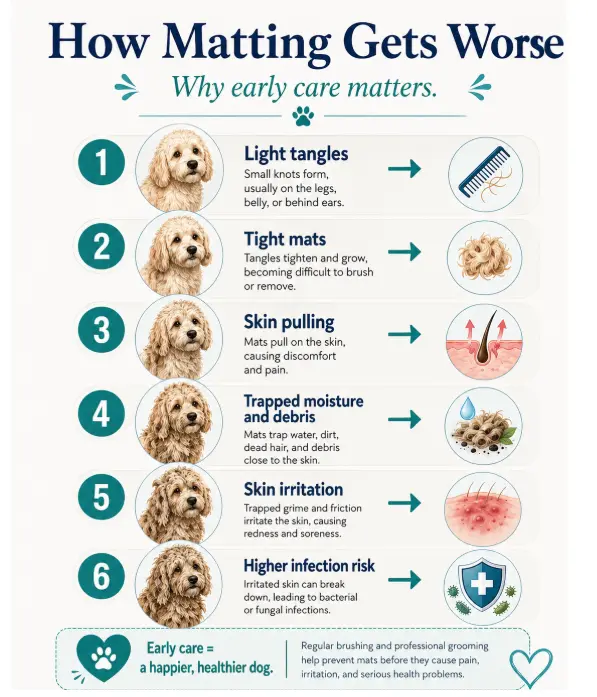
Matting becomes serious in stages.
It usually starts quietly:
light tangles → tighter mats → skin pulling → trapped moisture and debris → Skin Irritation → higher infection risk
That progression matters because it helps you understand why prevention is easier than correction.
Here is what can happen as matting gets worse:
1. The coat tightens
At first, the coat twists and knots in small sections. This is common in dogs with soft, curly, fine, or friction-prone coats.
2. The mat starts pulling on skin
As it tightens, the coat no longer moves naturally. It pulls with motion. That can make lying down, walking, and even normal handling more uncomfortable.
3. Moisture and debris get trapped
Mats can hold onto dampness after baths, rain, drool, or outdoor play. They can also trap dirt, oils, and tiny debris against the skin.
4. Irritation develops underneath
Now the problem is not just the coat. It is the skin under the coat. Redness, tenderness, damp patches, rubbing, and odor can start to show up.
5. Infection risk goes up
This is where people need to be careful with their assumptions. Mats do not automatically cause infection. But severe matting can create conditions that make Skin Health worse and increase the risk of skin infections from dog mats if irritation, moisture, and damage are allowed to continue.
That is why early care matters.
How Skin Infections From Dog Mats Can Start
The key word here is “can.”
Not every mat leads to infection. But severe mats can create the right environment for trouble.
When the skin cannot breathe well, when moisture stays trapped, and when friction keeps irritating the same spot, the surface becomes more vulnerable. If that irritated skin breaks down, the risk grows.
This is often how skin infections from dog mats become part of the conversation.
Not because mats are “dirty” in a simple way. But because they can:
- keep dampness against the skin
- hide rubbing and rawness
- trap debris close to irritated areas
- stop owners from seeing early redness
- make the dog less willing to be touched or checked
This is also why Professional Grooming matters. A groomer may notice odor, dampness, tenderness, or skin damage before the owner ever sees it.
That does not mean the groomer diagnoses an infection.
It means the groomer sees enough to say: this needs attention.
Why Dematting Is a Health Issue, Not Just a Grooming Issue
People often hear the word dematting and think of brushing.
Sometimes it is that simple.
Sometimes it is not.
Once mats become tight, heavy, or close to the skin, removal is no longer just about looks. It becomes about comfort and safety.
That is why I see Dematting as more than appearance work. In the right context, it becomes dematting as health care not because grooming replaces medicine, but because removing painful, skin-pulling mats helps protect the dog from more discomfort and more damage.
That said, not every mat should be aggressively brushed out.
Trying to force severe mats apart can hurt. It can inflame already tender skin. It can turn a manageable situation into a traumatic one for the dog.
This is one reason so many owners wait too long. They assume more brushing later will fix it. Sometimes later means the coat is already past that point.
Dogs Most at Risk for Matting
Some dogs mate faster than others.
That is not bad ownership. It is a coat of reality.
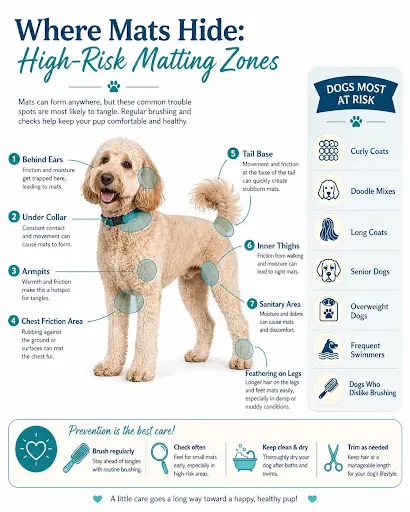
Dogs most at risk often include:
- curly-coated breeds
- doodle mixes
- dogs with soft fine coats
- long-coated dogs
- dogs who wear harnesses or collars constantly
- senior dogs who do less self-movement
- overweight dogs with more friction zones
- dogs who swim often or stay damp longer
- dogs who dislike brushing and get skipped
Risk also depends on body zone.
The fastest matting trouble spots are often:
- behind the ears
- under the collar
- armpits
- inner thighs
- tail base
- chest friction areas
- feathering on legs
- sanitary zones
These areas mat first because they rub, stay damp, or get overlooked.
A Story from My Grooming Table
One dog came in with a fluffy coat that still looked pretty good from the top.
That is what fooled the owner.
The problem was behind the ears and under the collar line.
When I started working through those areas, the dog stiffened. Not wildly. Just enough for me to slow down and check more carefully.
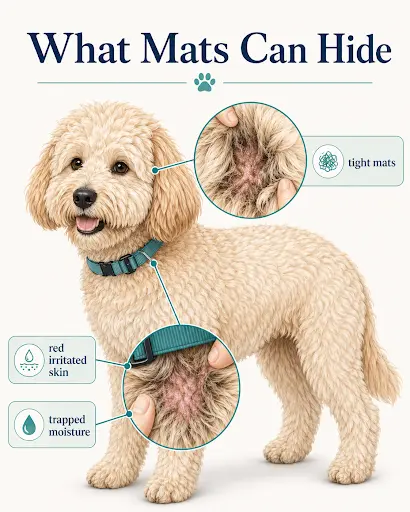
Under the outer coat, the mats were tight. The skin beneath them looked red and damp. There was a smell beginning in one section, and the dog clearly did not want that area touched.
That moment matters.
Because this is where people think grooming is still about appearance. It was not. That appointment became about safely removing what could be removed, protecting the dog from more pain, and telling the owner clearly that the irritated area needed close follow-up and possibly veterinary attention if it worsened.
The owner was shocked.
Not because they did not care. Because the coat still looked “fine” from above.
That is the part matting hides best.
Warning Signs a Matting Problem Is Getting Serious
Here is the short version.
If you notice these signs, the problem may be beyond “just brushing later”:
- the dog flinches when touched
- the mat feels tight to the skin
- there is odor under the coat
- the skin underneath looks red, damp, or shiny
- your dog resists brushing in one area
- the mat is close to the collar, armpits, groin, or tail base
- you see raw skin, drainage, or bleeding
- the dog licks, scratches, or chews the same area often
These are the moments where Early Detection matters most.
Light Tangles vs Tight Mats vs Severe Matting
| Light Tangles | Tight Mats | Severe Matting |
| Surface-level knots that are usually still manageable. | Dense mats close to the skin that are starting to pull. | Heavy compacted matting that can hide skin damage and require clipping. |
| Little to no skin involvement yet. | Skin may already look pink, sensitive, or tight. | Skin may be damp, irritated, raw, or hidden under the coat. |
| Usually low discomfort and best handled early. | Discomfort is beginning and movement may feel less natural. | Painful, restrictive, and much harder to remove safely. |
| Routine brushing and coat maintenance. | Careful professional grooming is often needed. | Clipping and possible veterinary follow-up may be needed. |
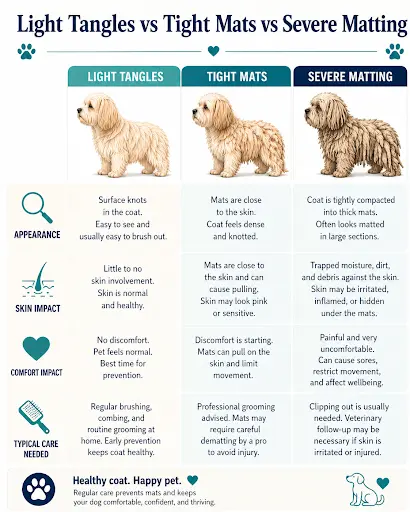
Figure 4. Comparing light tangles, tight mats, and severe matting helps owners act before comfort drops.
Preventing Mats Before They Become Painful
This is the part that helps most.
If you want to prevent matted dog hair, you do not need a perfect routine. You need a realistic one.
That usually means:
- brushing on a schedule that matches the coat type
- paying extra attention to friction zones
- checking the coat after rain, swimming, or baths
- drying thoroughly when the dog gets wet
- not waiting until the coat “looks bad”
- keeping regular dog grooming appointments for higher-maintenance coats
For many dogs, prevention is less about long brushing sessions and more about consistency. Five minutes in the right areas does more good than occasional panic grooming once the coat is already tangled.
If your dog is prone to knots, Professional Dog Grooming and regular dog grooming services become part of prevention, not luxury.
What Not to Do at Home
This part matters more than most people think.
Do not:
- yank at tight mats with a brush
- pull them apart with your fingers if the dog is reacting
- cut close to the skin with scissors
- soak a heavy mat and assume it will loosen on its own
- ignore odor or dampness under the coat
- wait until the dog needs a full haircut to fix what could have been prevented
Owners usually mean well here. But home dematting goes wrong fast when skin is already tender and hidden under the mat. Dog skin is thinner than many people realize. Scissor injuries and brush trauma happen when people cannot see where coat ends and skin begins.
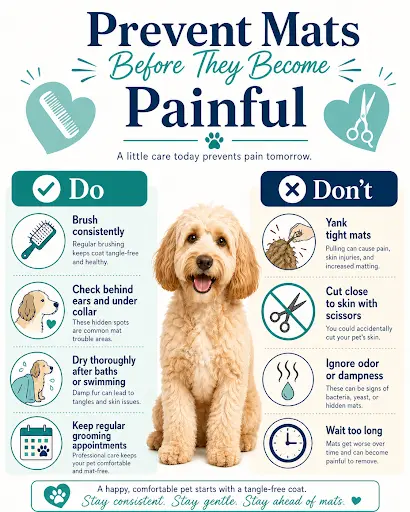
Figure 5. Safe prevention habits are far better than painful do-it-yourself dematting attempts.
When a Groomer Should Refer You to the Vet
A groomer can help with coat care.
A veterinarian handles medical care.
That line should stay clear.
A vet referral may be needed when matting is paired with:
- raw or open skin
- bleeding
- pus or drainage
- foul odor
- strong pain reaction
- severe swelling
- skin that looks infected
- a dog too distressed to tolerate safe handling
This is where dog grooming and wellness meet real safety concerns. The groomer notices. The vet evaluates. That partnership protects the dog best.
The Bottom Line
Mats are not always dramatic at the start.
That is exactly why they get underestimated.
But when tangles tighten, start pulling on the skin, and trap moisture and debris, the problem becomes much more than cosmetic. It becomes a comfort issue. A hygiene issue. A Skin Health issue.
That is why prevention matters so much.
It is kinder. Safer. Easier on the dog.
And yes, it is far better than waiting until heavy Dematting becomes the only option left.
Follow Well Groomed Pets for more grooming-led wellness insights that help you protect your dog with calmer, smarter, and more consistent care.