
You may think the tub is just where your dog gets clean.
It is not.
The tub is where the coat opens up. Where wet fur separates. Where hidden skin becomes easier to see. Where a bump, flea, tick, rash, or sore spot can finally show itself.
And sometimes, that matters more than the bath.
Because daily petting misses things.
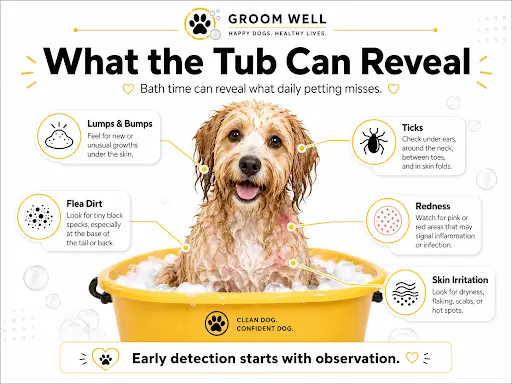
You might rub your dog’s back every day and still miss a small lump under thick fur. You might not see flea dirt near the tail base. You might not notice a tick tucked under the collar line. You might not spot redness until the coat is wet and parted.
That is where Early Detection begins.
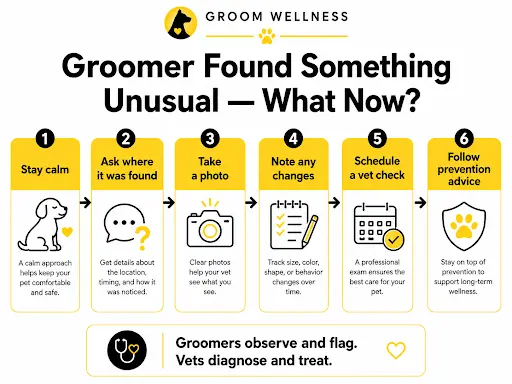
What should I do if a groomer finds a lump on my dog? Do not panic. Ask where it was found, what it felt like, and whether the groomer noticed pain, color change, bleeding, or fast growth. Groomers cannot diagnose. But you should schedule a vet check so the lump can be properly examined.
That one moment can change everything.
This article is part of our pet wellness guide, where we explain how grooming supports healthier, more observant care between vet visits.
Why the Tub Reveals What Petting Misses
Dry coat hides things. Wet coat tells the truth faster.
When a dog’s coat gets wet, it separates. Dense hair lays flatter. Skin becomes easier to see. Small changes that were buried under fluff can stand out.
That is why bath time is different from casual petting.
At home, you may stroke the top of the coat. A groomer is usually working through it. Around the neck. Behind the ears. Under the belly. Near the tail. Around the paws. Along the ribs.
That kind of handling matters.
It is not a medical exam. It is not a diagnosis. But during Professional Grooming, the body gets observed in a way most dogs do not get every day.
That is the real value. Not fear. Awareness.
What Groomers Notice During Bath Time
A good groomer is not just watching the shampoo foam. They are watching the dog.
They notice how the dog reacts when water touches one area. They notice if the dog flinches when the skin is rubbed. They notice if one patch smells different. They notice bumps, scabs, swelling, parasites, and irritated skin that may have been hidden under the coat.
During bath time, groomers may notice:
- small Lumps and Bumps
- raised skin spots
- scabs or sores
- redness or irritation
- Flea Dirt
- live fleas
- ticks attached near ears, collar, or legs
- unusual odor from the skin
- hair thinning or bald patches
- one area the dog keeps licking or guarding
This is where dog grooming and wellness becomes more than a slogan. A clean dog is good. A noticed dog is better.
Lumps and Bumps: What They May Mean
Let’s be clear. Not every lump is cancer.
Some lumps are harmless. Some are cysts. Some are fatty growths. Some are skin tags. Some need monitoring. Some need testing.
The problem is this: you cannot tell by guessing.
A lump’s size, color, texture, growth speed, pain level, and location can all matter. So if a groomer finds a lump, the goal is not panic. The goal is information.
Where is it? How big is it? Is it firm or soft? Is the dog bothered by it? Is the skin red, bleeding, or irritated? Has the owner noticed it before?
That is the handoff: the groomer notices, the owner follows up, and the vet evaluates.
Groomer Found a Lump on My Dog – What Should I Do?
This is the search no pet parent wants to type: groomer found a lump on my dog.
But if that happened, take a breath.
Here is what to do next:
- Ask the groomer where the lump was found.
- Ask if it seemed painful, red, bleeding, or attached to the skin.
- Take a clear photo if possible.
- Write down the date it was found.
- Schedule a vet appointment.
- Do not squeeze, cut, drain, or treat it at home.
That does not mean the lump is automatically serious. It means it deserves the right eyes.
A groomer can help you find it. A vet can tell you what it is.
Detecting Dog Skin Cancer Early Without Panic
This section needs balance.
Because yes, detecting dog skin cancer early can matter. Some skin tumors can look like ordinary lumps or bumps. Some may grow quickly. Some may change over time.
But here is the part people need to hear: a lump is not a diagnosis.
A groomer finding a lump is not the same as finding cancer. It is finding a reason to check.
That is the calm way to think about detecting dog skin cancer early. It is not about assuming the worst. It is about not ignoring changes that deserve veterinary review.
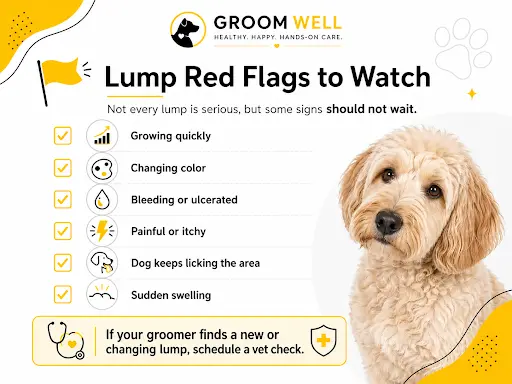
Pay attention if the lump is:
- new
- growing
- bleeding
- painful
- itchy
- changing color
- changing texture
- bothering your dog
That is when waiting is not smart. Not because you should panic. Because you should act.
Finding Fleas During Grooming: What Groomers Look For
Fleas are tiny. Their signs are not.
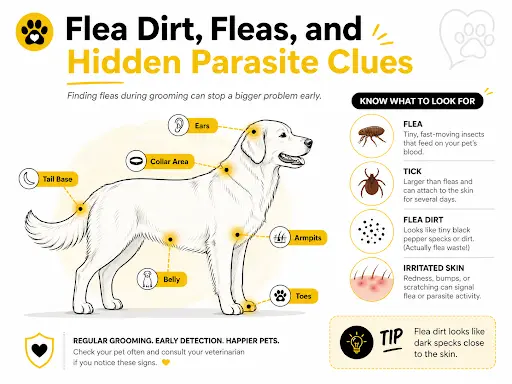
During a bath, groomers may see live fleas moving through the coat. They may also see Flea Dirt, which looks like small black or dark brown specks. It often shows up near the tail base, belly, groin, and back legs.
That is why finding fleas during grooming can be so important. It may be the first sign before the home is fully infested.
A groomer may notice:
- black specks in the coat
- live fleas
- red irritated skin
- excessive scratching
- thinning hair near the tail base
- small scabs from bites
- the dog reacting strongly to certain areas
Again, this is not diagnosis. It is a warning sign. And with parasites, early action matters.
Flea Dirt, Ticks, and Skin Irritation: Small Clues That Matter
Parasites are not just annoying.
They can irritate skin. They can cause itching. Some dogs react strongly to flea bites. That is why finding fleas during grooming should not be brushed off.
A single flea may mean more fleas nearby. Flea dirt usually means fleas have been feeding. And if a tick is attached, it needs to be removed properly and monitored.
Groomers may spot ticks around:
- ears
- neck
- under collar
- armpits
- between toes
- tail base
- belly
Ticks can be easy to miss under thick coats. So can flea dirt. So can bite irritation. That is why bath time matters. It slows everything down. The coat opens up. The clues get easier to see.
A Story from My Grooming Table
A dog came in for a normal bath. Nothing dramatic.
The owner said he had been scratching a little more than usual, but still eating, playing, and acting like himself.
Once the coat was wet, I noticed tiny dark specks near the tail base. Not just dirt. They were concentrated. Stuck close to the skin. And the skin underneath looked irritated.
I slowed down and checked more carefully. Then I saw a live flea move through the wet coat.
That changed the appointment.
Not because I was diagnosing anything. I was not.
But I could tell the owner this was not just ‘a little itch.’ There were signs that needed action. The owner followed up with their veterinarian for parasite prevention guidance and started treating the home environment too.
That is the part people forget. Fleas are not only on the dog. They can become a home problem fast. And sometimes, the first clear sign shows up in the tub.
What Needs a Vet Soon vs What Needs Monitoring
Some things can be noted and watched. Others should not wait.
Here is the difference.
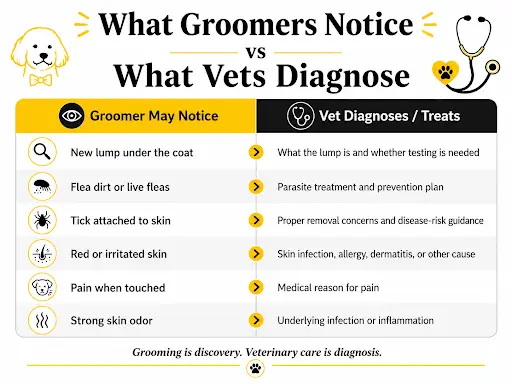
What Groomers May Notice vs What Vets Diagnose
| Groomer May Notice | Vet Diagnoses / Treats |
| New lump under the coat | What the lump is and whether testing is needed |
| Flea dirt or live fleas | Parasite treatment and prevention plan |
| Tick attached to skin | Proper removal concerns and disease-risk guidance |
| Red or irritated skin | Skin infection, allergy, dermatitis, or other cause |
| Pain when touched | Medical reason for pain |
| Bleeding or ulcerated bump | Cause and treatment plan |
| Hair loss or scabs | Parasites, allergy, infection, or other skin disease |
| Strong skin odor | Underlying infection or inflammation |
This is the cleanest way to understand it: the groomer may notice the sign. The vet explains the reason.
Red Flags You Should Not Ignore
Here is the quick list. Call your vet if you notice:
- lump growing quickly
- lump changing color
- lump bleeding or ulcerated
- lump painful or itchy
- dog licking or chewing one area
- visible fleas or flea dirt
- ticks attached to skin
- sudden skin redness or sores
- unexplained swelling
- strong odor from skin
These signs do not automatically mean something terrible. But they do mean your dog needs the right next step. That is what Veterinary Follow-Up is for.
Groomer vs Vet: Who Does What?
This part matters. Because trust depends on clear roles.
A groomer should never say, ‘This is cancer.’ A groomer should never diagnose infection. A groomer should not prescribe parasite medication. That is medical work.
What a groomer can say is:
- I found a new lump here.
- This area looks irritated.
- I saw flea dirt.
- There is a tick near the collar.
- This spot seems painful.
- You should have your vet check this.
That is powerful enough.
You do not need your groomer to diagnose. You need your groomer to notice. And you need your vet to evaluate.
That partnership is where professional dog grooming becomes part of a larger care system.
Why Regular Grooming Helps Catch Change Earlier
One appointment can reveal a problem. Regular appointments reveal patterns.
That is the real advantage.
A groomer who sees your dog often may notice when something is new. A bump that was not there last visit. A flea problem that showed up suddenly. A patch of irritation that keeps returning. A skin odor that is different from normal.
That comparison matters. Especially for dogs with thick coats, long coats, curly coats, or dogs who are hard to check at home.
This is also why consistent Dog Grooming Services can support more than coat maintenance. They create repeated chances to notice what your dog cannot explain.
And when something unusual is found, the path should be simple: notice it, document it, tell the owner, and refer to the vet when needed. No drama. Just smart care.
The Bottom Line
Grooming is not diagnosis. It is discovery.
The tub can reveal what daily petting misses. A small lump. Flea dirt. A tick. A red patch. A sore spot. A bump the owner never saw.
That does not mean you should panic. It means you should pay attention.
Because detecting dog skin cancer early, catching parasite signs, and noticing unusual skin changes all start with one thing: someone seeing what was hidden.
If you ever find yourself thinking, ‘A groomer found a lump on my dog,’ take it seriously. Stay calm. Ask questions. Then book the vet check.
For more practical Dog Grooming and Wellness insights, follow Well Groomed Pets and learn how small grooming discoveries can help protect your dog’s comfort, skin health, and peace of mind.