
Most people think grooming starts with appearance.
A cleaner coat. A fresher smell. A neater face. Trimmed feet.
That is part of it. But that is not the whole story.
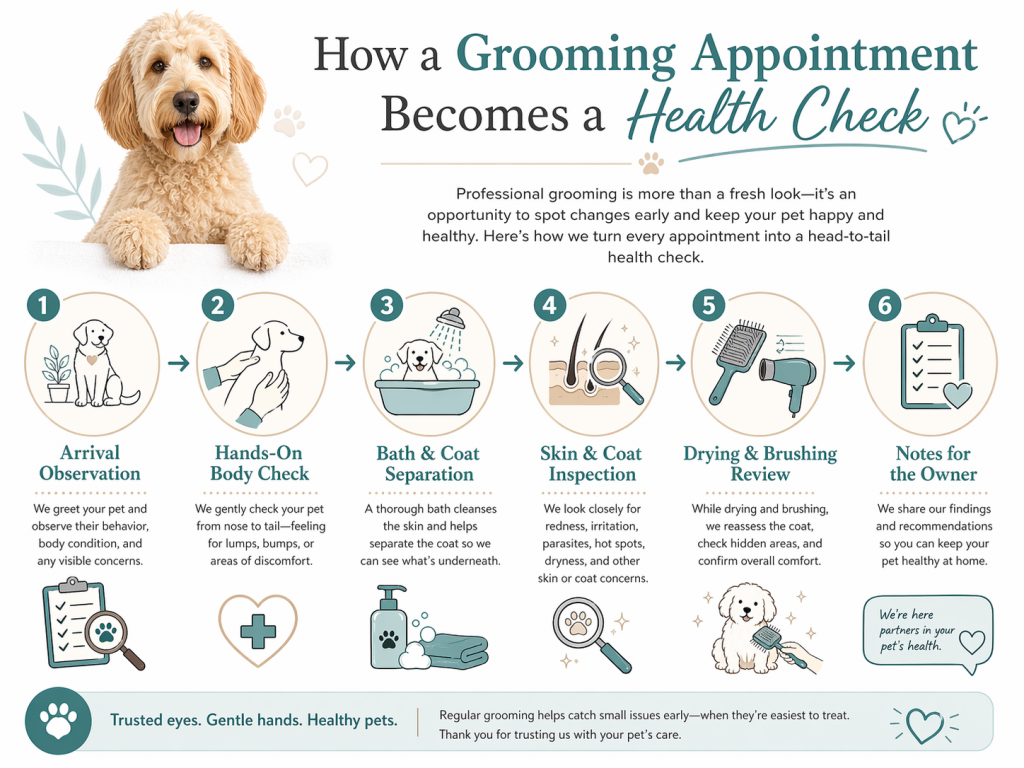
What many owners do not realize is that a grooming appointment is also one of the few times someone slows down, gets hands on the body, separates the coat, checks hidden areas, and notices small changes before they become obvious at home. That is why grooming often works like an early warning system.
What do groomers check during grooming? Groomers check the skin, coat, ears, nails, paws, body condition, comfort level, and reaction to touch. They look for odor, lumps, sensitivity, matting, redness, swelling, and posture changes. That hands-on process turns a routine appointment into a practical observation layer that supports Early Detection.
That is exactly what makes a dog’s health check during grooming more important than most people realize.
This article is part of our broader pet wellness guide.
Why Grooming Is More Than Just a Bath
A bath sounds simple.
Water. Shampoo. Rinse. Dry.
But once you understand what happens during a real grooming appointment, you stop seeing it as basic maintenance.
You start seeing it as close observation.
During Professional Grooming, a dog is handled more carefully and more thoroughly than during everyday petting at home. The coat gets parted. The skin becomes more visible. The paws are lifted. The ears are checked. The nails are examined. The dog’s comfort level is noticed from one body area to the next.
That is why grooming often reveals things owners never meant to miss.
It is not because owners do not care. It is because daily life is different. You pet your dog when they are moving, resting, playing, or snuggling. You are not usually doing a deliberate head-to-tail Body Check in bright light with the coat fully worked through.
A groomer often is.
That is the difference.
What Happens During a Grooming Health Check?
A dog health check during grooming does not begin after the bath. It starts before the dog is even wet.
The first step is observation.
How does the dog walk in? Do they seem stiff? Do they resist being lifted? Do they favor one leg? Do they seem more sensitive than usual around the face, feet, hips, or tail?
Then comes touch.
This is where Tactile Assessment matters. A groomer is not just looking at the coat from the surface. A groomer is feeling through it. Hands move under the fur, over the limbs, around the neck, down the back, across the ribs, around the tail base, and through the paw pads and nails.
Once the coat is wet, another layer becomes visible.
The skin shows more clearly. Dense areas loosen. Tight mats become more obvious. Irritated patches can stand out faster. Texture changes are easier to spot. A coat that looked fine on top may tell a different story underneath.
Then the drying and brushing phase adds even more information. This is when the coat gets separated section by section. Hidden debris, small lumps, tender spots, and thinning areas often become easier to notice.
That is how a routine bath becomes a professional dog wellness check.
It is not a diagnosis.
It is repeated, intentional observation.
What Do Groomers Look For?
This is the question most owners want answered clearly:
What do groomers look for?
The answer is not one thing. It is a pattern of things.
A groomer looks for what feels different, looks different, smells different, or gets a different reaction from the dog.
That includes:
Skin and Coat Changes
A healthy coat does not tell the whole story unless you get under it. Groomers often notice redness, dandruff, scabs, thinning patches, greasy buildup, hotspots, or areas where the coat texture suddenly changes. These details can say a lot about Skin Health and Coat Condition.
Lumps, Bumps, and Swelling
Some changes are felt before they are seen. That is why touch matters so much. A small lump under thick fur can go unnoticed during regular petting, especially in longer-coated dogs.
Ears
Groomers may notice wax buildup, odor, redness around the opening, or sensitivity when the ears are handled. That does not mean a diagnosis is being made. It means something may need a closer veterinary look.
Nails and Paw Pads
Long nails, worn paw pads, trapped debris, cracks, or tenderness can all show up during routine handling. Sometimes gait changes make more sense once the feet are examined closely.
Body Sensitivity
Flinching. Pulling away. Sudden tension. These reactions matter. Dogs often tell you where they are uncomfortable before you ever see the reason.
Hygiene Zones
Under the collar. Behind the ears. Under the legs. Around the tail. Between the pads. These are the areas most likely to hide trouble.
So when people ask, what do groomers look for, the honest answer is this: anything that suggests the dog’s body is not as comfortable or as normal as it should be.
Head-to-Tail Grooming Inspection Process
A good groomer does not inspect randomly. There is usually a flow.
That flow helps with consistency. And consistency is what makes change easier to notice.
A typical head-to-tail inspection may include:
Head and Face
Eyes, muzzle, chin, lips, and expression. Not to diagnose eye or mouth disease, but to notice odor, swelling, buildup, tenderness, or reluctance during handling.
Ears
Outer ear condition, smell, wax level, redness, and sensitivity.
Neck and Collar Area
This spot is easy to miss at home. Moisture, friction, hidden tangles, and skin irritation can collect here.
Chest, Sides, and Back
This is where lumps, coat texture changes, and hidden mats often show up. It is also where a groomer may notice overall body condition more clearly over repeated visits.
Legs and Joints
Stiffness, resistance, or sensitivity when lifting a leg may reveal discomfort that owners only notice later as “slowing down.”
Paws and Nails
Pads, nails, dewclaws, trapped debris, and between-toe buildup all matter. Dogs carry their discomfort here quietly until it gets harder to ignore.
Tail Base and Sanitary Area
This area can hide matting, redness, irritation, and hygiene concerns fast.
This is what makes a dog’s health check during grooming so useful. It is not one glance. It is a repeatable process from one body region to the next.
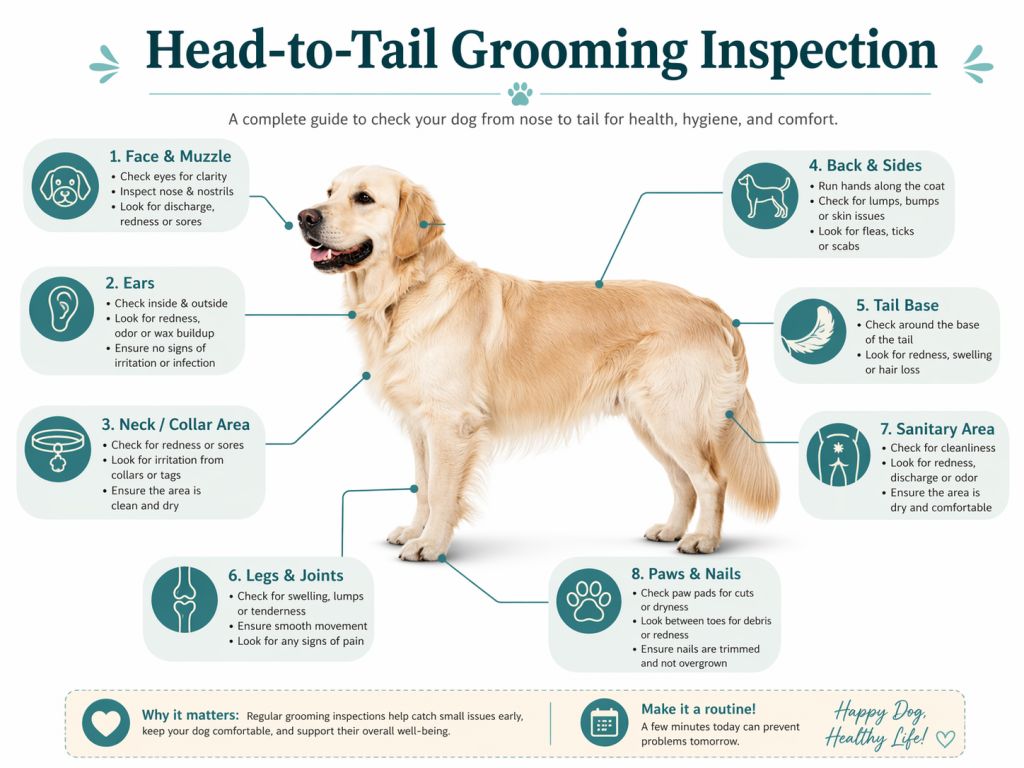
Figure 2. A head-to-tail inspection helps groomers notice changes across the body in a consistent order.
A Story from My Grooming Table
One dog I groomed on a regular schedule had a thick, fluffy coat and a calm temperament. On the surface, everything looked normal. The owner kept up with appointments and cared deeply about the dog.
But during brushing around the lower back and inner thighs, the dog started giving a small reaction. Not dramatic. Just a pause. A tightening of the body. A quiet resistance when I worked through one specific area.
So I slowed down.
Underneath the outer coat, there were tight mats sitting close to the skin. From above, they were easy to miss. Once I worked carefully around them, I could see that the skin underneath was already irritated and holding moisture.
The owner had no idea. At home, the coat still looked soft and fluffy on top.
That is the part people do not always understand. A dog can look fine from a distance and still be uncomfortable underneath the coat.
I did not diagnose anything. That is not my role. But I did explain what I found, what I could safely address as part of grooming, and what the owner should monitor closely afterward. That appointment did not become important because of the bath itself. It became important because the grooming process exposed a hidden problem before it became worse.
That is what a professional dog wellness check often looks like in real life.
Signs Groomers Catch That Owners Miss
Again, this is not about blame.
Owners live with their dogs. Groomers inspect them differently.
That difference in perspective matters.
Some of the most common things groomers may catch before owners do include:
- small lumps under dense coat
- early matting close to the skin
- odor changes in ears or skin folds
- thinning coat in specific areas
- irritation under collars or harness friction points
- long nails affecting stance
- tenderness in one body zone
- buildup between paw pads
This is why the question of what groomers look for matters so much. The answer helps owners understand that grooming is not only about appearance. It is also about noticing what daily familiarity can blur.
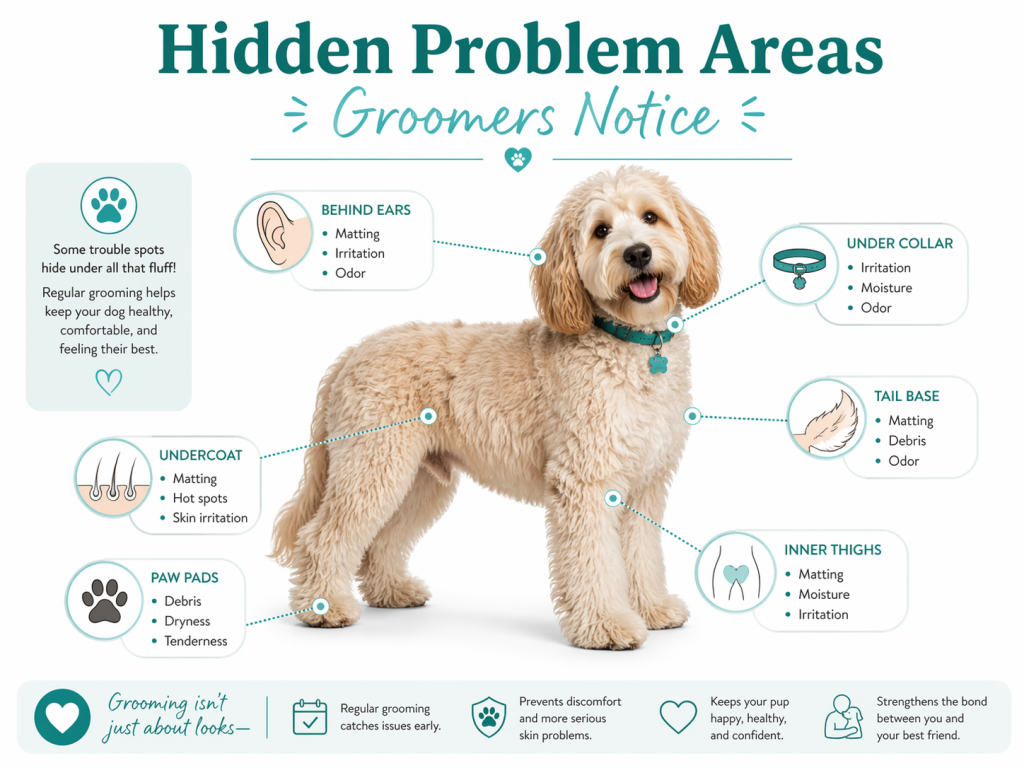
Grooming Health Check vs Veterinary Exam
| Grooming Health Check | Veterinary Exam |
| External observation of coat, skin, ears, nails, paws, and comfort level | Full medical evaluation |
| Hands-on routine awareness | Diagnosis and treatment |
| Can notice odor, sensitivity, lumps, coat change, matting, posture issues | Can assess internal and systemic conditions |
| Happens more frequently for many dogs | Usually happens less often |
| Helps flag concerns early | Confirms what the issue is and how to treat it |
The key is to keep the line clear.
Groomers do not diagnose. Groomers observe, flag, and refer. Veterinarians diagnose and treat.
That is exactly why both matter.
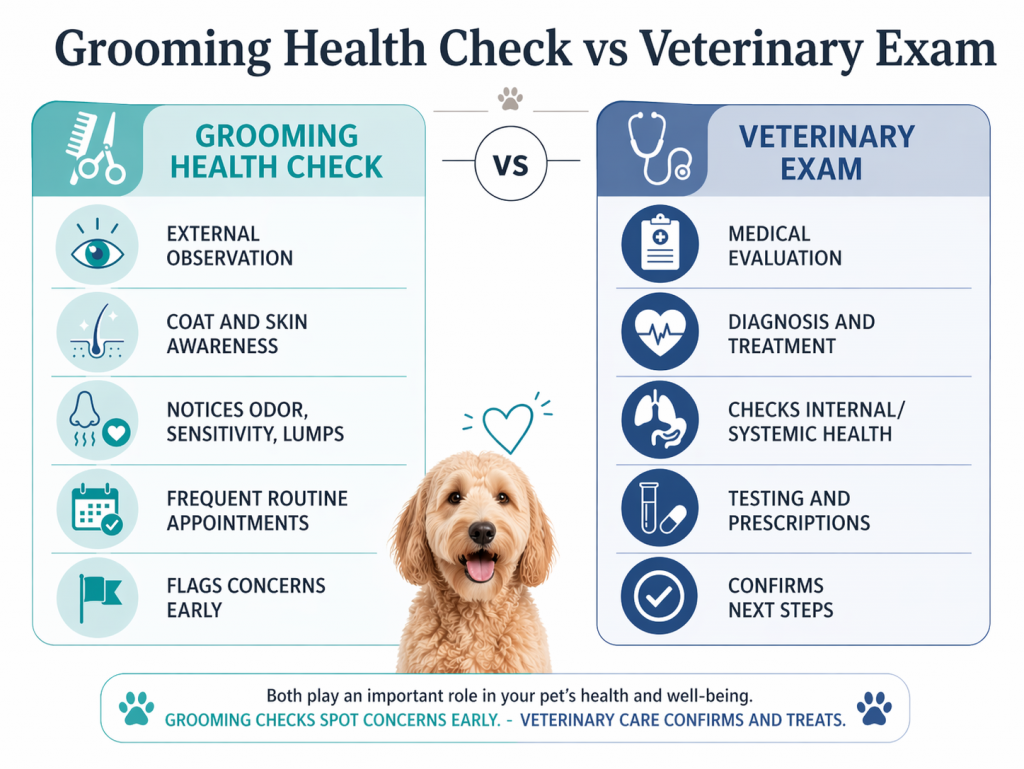
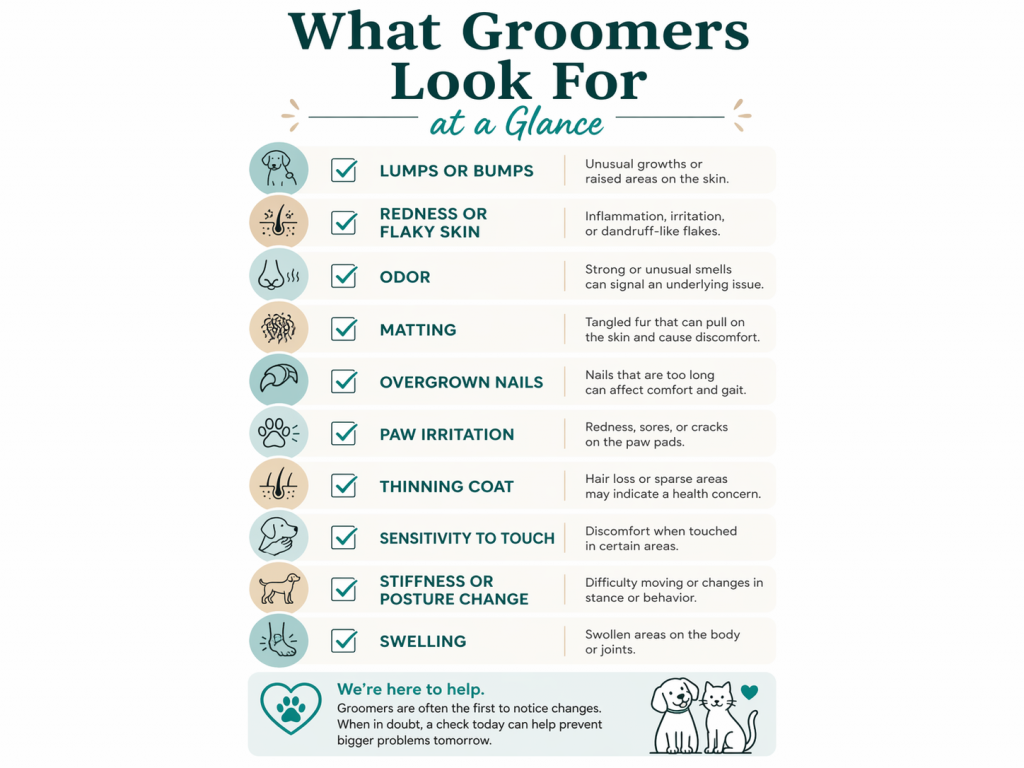
What Groomers Look For at a Glance
If you want the short version, here it is.
During a grooming appointment, a groomer may be watching for:
- lumps or bumps
- redness or flaky skin
- odor from ears, skin, or mouth
- matting close to the skin
- overgrown nails
- debris or irritation in paws
- thinning coat
- unusual sensitivity to touch
- stiffness or posture changes
- swelling in isolated areas
That is the practical value behind a professional dog wellness check. It helps turn small observations into useful awareness.
Why This Matters More Than You Think
Dogs are good at adapting.
Sometimes too good.
They keep walking on long nails. They tolerate mild discomfort. They stop reacting to gradual changes that would have gotten your attention earlier if they happened all at once.
That is why observation layers matter.
Grooming adds one.
Not because it replaces a vet visit. Not because it solves every problem. But because it helps catch what owners may not see during ordinary routines at home.
And the more consistently a dog is groomed, the more useful that observation becomes. Repeated visits create comparison. Comparison helps reveal change. Change is often where the earliest clues live.
If you want the bigger-picture foundation behind this, go back to our pet wellness guide and see how grooming fits into the full preventative care picture.
The Bottom Line
A grooming appointment is not just a beauty service.
It is one of the most practical external observation points your dog may get on a regular basis.
That is what makes a dog health check during grooming so valuable. It helps reveal what is hidden under the coat, what the dog is quietly reacting to, and what may need attention sooner rather than later.
A good groomer is not there to diagnose.
A good groomer is there to notice.
And sometimes, that noticing makes all the difference.
Follow Well Groomed Pets for more grooming-led wellness insights that help you protect your pet with smarter, calmer, more observant care.