
You do not want your first clue to be a crisis. Not a swollen ear. Not a limp. Not a bad smell that suddenly gets stronger. Not a hidden lump you only find once it has already grown. But that is exactly how many pet health problems get discovered. Too late.
By then, your pet may already be in pain. Your stress is high. The treatment plan is more complicated. The bill is bigger. And the question hits hard: how long has this been going on?
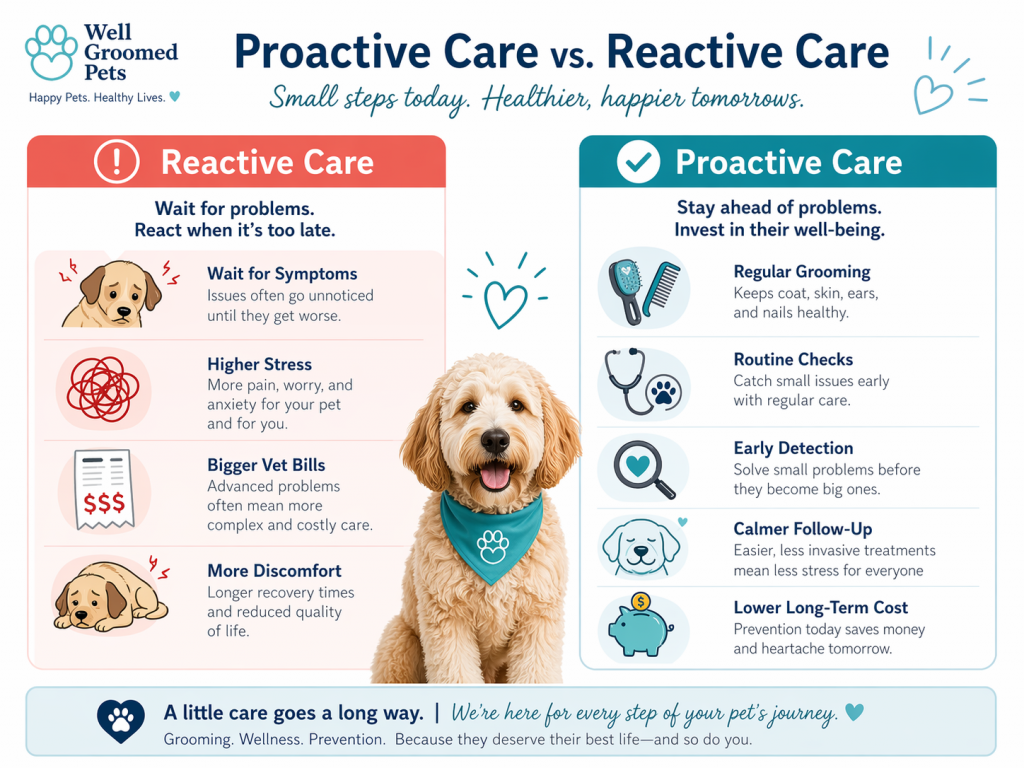
The main benefits of Preventative Pet Care are early detection, better comfort, lower long-term costs, fewer surprises, and more chances to catch small issues before they become bigger ones. That is the real value of Proactive Dog Health: it protects your pet before obvious symptoms force action.
Reactive Care Feels Normal—Until It Gets Expensive
Most pet owners do not delay because they do not care. They delay because life gets busy. Because the coat hides changes. Because the dog still eats. Because the cat still acts mostly normal. Because nothing feels urgent yet.
That is how reactive care starts. You wait for visible proof. You wait for a stronger sign. You wait for something obvious enough to feel real. The problem is that many pet issues do not start out obvious. A mat tightens slowly. A skin flare starts small. An ear problem builds quietly. A nail gets longer week by week until posture changes. A lump sits under thick fur where no one sees it.
That is why Early Detection matters so much. Pets often hide pain well. Fur hides even more. If you wait for a loud warning sign, you are often already behind.
The Cost of Delay Is More Than Money
Waiting feels cheaper at the moment. It rarely stays that way. A small issue does not stay small just because it is ignored. It grows. It deepens. It gets more painful. It often becomes more expensive.
Think about what delay can look like in real life. A little wax buildup can turn into a painful ear infection. Light matting can turn into skin irritation under the coat. Overgrown nails can affect gait and increase injury risk. A strange odor can be the first obvious sign of a bigger problem that has been building quietly for days or weeks.
There is an emotional cost too. Reactive care puts you into decision making mode under pressure. You are no longer calmly following up on a small concern. You are reacting while your pet is uncomfortable, you are worried, and the outcome feels uncertain.
Proactive Care Is Not Harder. It Is More Consistent.
Many people hear the word proactive and imagine a long, expensive checklist. That is not the real picture. Proactive care is built on routine. It is a small action done on time. It is paying attention before your pet is forced to ask for help in obvious ways.
In simple terms, proactive care means regular wellness exams, routine grooming, quick at-home checks, nail and ear monitoring, and acting early when something feels off. It is not about panic. It is about pattern recognition. When you know what is normal, change becomes easier to spot.
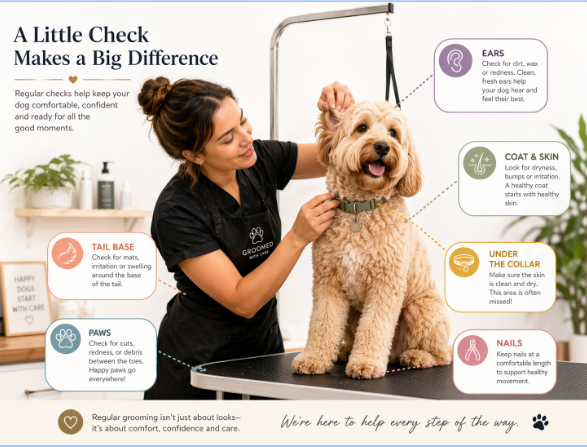
This is where grooming as preventative medicine becomes practical. Grooming does not replace a veterinarian, but it does add another layer of observation between vet visits. A skilled groomer works through the coat, notices sensitivity, checks ears, observes posture, feels for lumps, and spots changes that casual petting can miss.
What Grooming Helps You Catch Between Vet Visits
A lot of issues hide in plain sight. They hide under fluff, behind the ears, beneath the collar, between paw pads, and around the tail base. That is why Professional Grooming supports more than appearance. It supports awareness.
A grooming appointment can help reveal changes related to Skin Health, coat condition, odor, nail length, ear debris, tenderness, and even Body Condition over time. The groomer is not diagnosing disease. The groomer is observing, flagging, and referring when something seems abnormal. That boundary matters. Veterinarians diagnose, test, and treat. Groomers help make sure small external warning signs are not overlooked.
Reactive Care vs. Proactive Care
| Reactive Care (Waiting for Symptoms) | Proactive Care (Regular Grooming & Checks) |
| Waits for pain, odor, limping, or visible symptoms to become obvious | Looks for small changes before they become obvious |
| Often discovers problems later | Often catches concerns earlier |
| Creates more stress and urgency | Allows calmer, faster follow-up |
| Can lead to more complex and costly treatment | May reduce the chance of escalation |
| Pets may stay uncomfortable longer | Supports comfort sooner |
| Depends on obvious warning signs | Builds on routine observation and touchpoints |
That is the whole difference. Reactive care waits for proof. Proactive care watches for patterns.
A Story From My Grooming Table
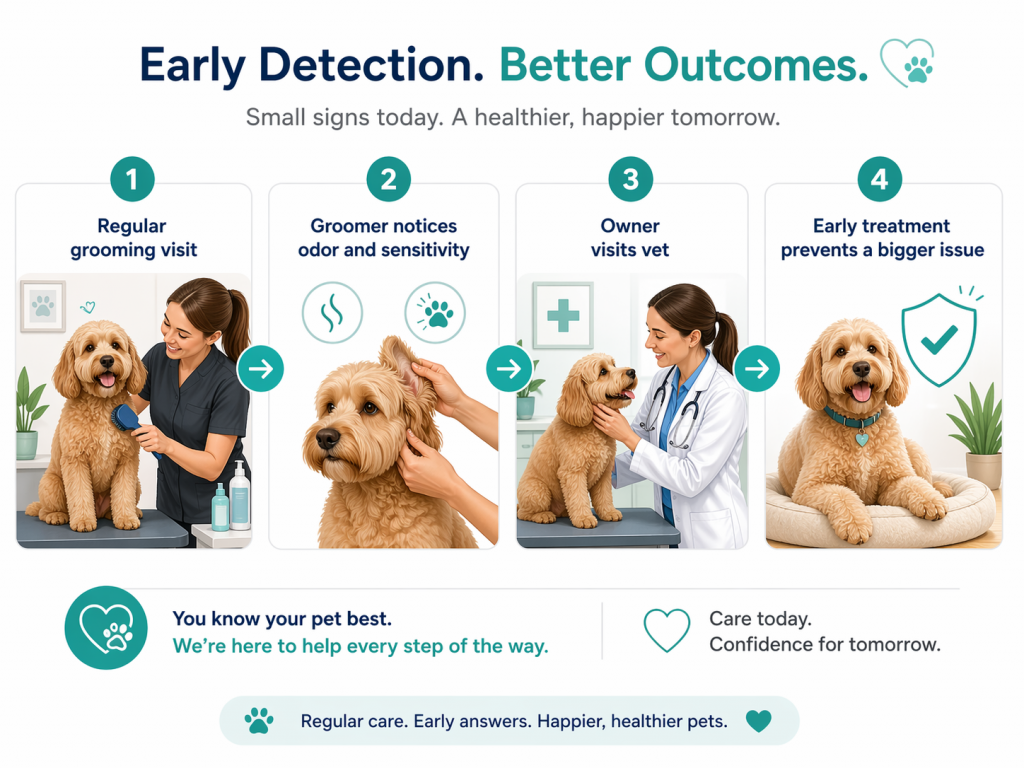
One dog I groomed regularly came in for what looked like a normal appointment. Nothing dramatic. No emergency. No alarmed owner. But as I worked around the ears and neck, I noticed two things right away: a strong odor that had not been there before and a flinch when I touched one side near the ear base.
From the outside, the coat still looked fine. At home, the family had only noticed a little extra head shaking. They thought it was probably nothing. I told them I was not diagnosing anything, but the smell and sensitivity were enough that I wanted their veterinarian to check it soon.
They booked an appointment. It turned out to be an early ear infection that was caught before it became worse. That matters because once an ear issue becomes more inflamed, the pet is more uncomfortable, treatment may be more involved, and the cost can climb fast. That appointment did not start as a medical visit. It started as a routine grooming visit. That is exactly why proactive grooming has value.
Warning Signs Owners Should Not Ignore
You do not need to panic over every small change. But you should not brush these off either:
- new lump or swelling
- foul odor from ears, skin, or mouth
- sudden sensitivity when touched
- limping or stiffness
- heavy scratching or head shaking
- severe matting
- red, moist, or flaky skin
- change in posture or gait
- coat thinning or bald spots
- discharge, bleeding, or open sores
If your groomer says, ‘Please have your vet look at this,’ take it seriously. That is not overreacting. That is how a good prevention system is supposed to work.
Why Owners Wait Too Long
Delay is not always laziness. Sometimes it is psychology. People wait because they hope the issue will pass, they are afraid of bad news, the pet seems mostly fine, or they do not realize grooming can reveal health clues. Some simply assume that visible pain is the first real sign that matters.
That thinking is understandable. It is also risky. By the time pain becomes obvious, the issue has often had time to build. Routine observation removes the pressure to guess. You are not waiting for a crisis. You are building a system that helps catch change sooner.
The Financial Side No One Likes to Talk About
Part of this conversation is money. Routine care feels optional to some owners because it is planned spending. Emergency care feels different because it arrives all at once. But delayed care often costs more in the long run. A manageable mat can become painful skin trouble. A skipped nail trim can end in an injury. A small ear issue can become a bigger infection. A hidden lump can go unchecked longer than it should.
Proactive care does not guarantee zero vet bills. No honest professional should promise that. What it can do is reduce the odds that a small, manageable issue becomes a bigger, more expensive one. That is one of the most practical preventative pet care benefits there is.
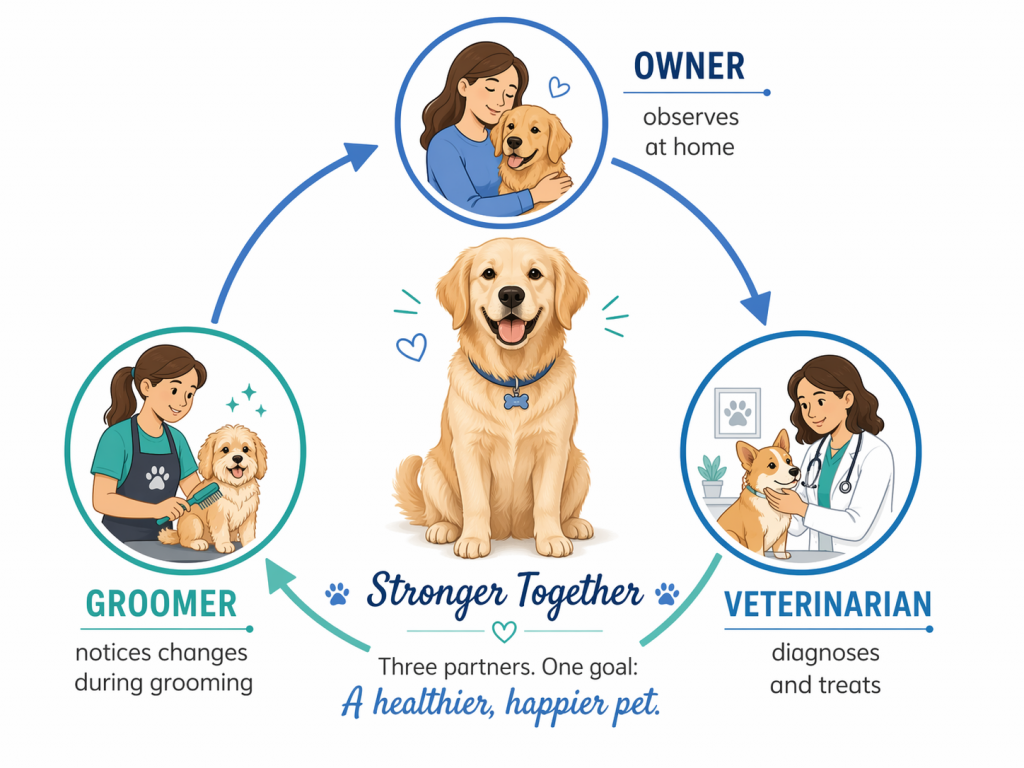
The Best Safety Net Is Simple: Owner, Groomer, Vet
You do not need one person doing everything. You need the right people doing their part. The owner notices daily behavior and changes at home. The groomer notices external changes through regular hands-on contact. The veterinarian diagnoses, tests, and treats.
When these three roles work together, your pet gets more support, more consistency, and more chances to stay comfortable. That is why your vet is essential but should not always have to be the first warning sign.
The Bottom Line
If you wait for obvious symptoms, you are already behind. That does not mean you failed. It means your care system needs more touchpoints.
The real value of proactive care is not panic. It is awareness. It is noticing earlier. Acting sooner. Reducing pain. Lowering stress. Giving your pet better odds. Once you understand that grooming is not just cosmetic, everything changes. You stop seeing it as extra. You start seeing it as part of the plan.
“why grooming is part of preventative care.”
Follow Well Groomed Pets for more grooming-led wellness insights that help you protect your pet before small problems turn into bigger ones.