
Preventative pet care is the routine, proactive care that helps your pet stay healthy before pain, disease, or visible problems appear. It includes vet visits, vaccines, parasite prevention, dental care, nutrition, and grooming. Grooming is part of preventative care because it helps catch hidden issues early, including lumps, bumps, matting, skin irritation, ear problems, and overgrown nails.
What Is Preventative Pet Care? (And Why Grooming Is Part of It)
You do not want to find out your pet is sick when the problem is already advanced.
That is the fear most pet owners carry, even if they do not say it out loud. A lump hidden under thick fur. A skin infection buried under mats. A painful ear issue your dog never showed you. A dental problem your cat kept masking. By the time you notice the obvious signs, the issue may already be bigger, harder, and more expensive to treat.
That is exactly why preventative pet care matters.
And here is the part too many articles miss: preventative pet care is not just about vet visits. It is also about what happens between those visits. It is about the hands on the coat, the close look at the skin, the check behind the ears, under the chin, between the paw pads, and around the tail. That is where grooming becomes more than a beauty service. It becomes an early warning system.
At Well Groomed Pets, we believe the smartest pet care plan is not vet or groomer. It is a vet and groomer. That is how you stay proactive. That is how you catch problems sooner. That is how you protect your pet’s comfort, health, and your wallet.
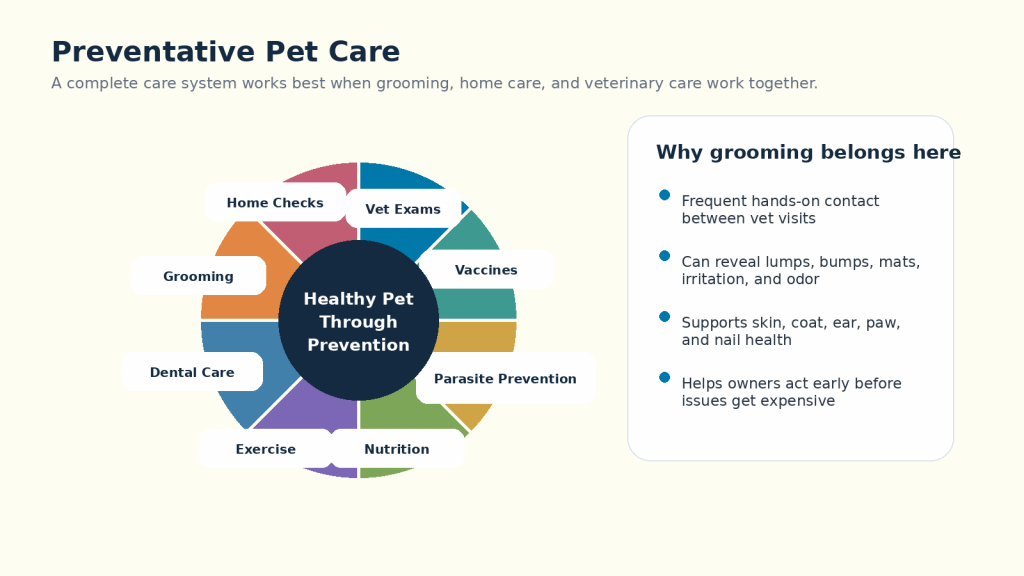
What Is Preventative Pet Care?
Preventative pet care is the routine, proactive care that helps your pet stay healthy instead of waiting for illness, pain, or dysfunction to become obvious. It usually includes wellness exams, vaccines, parasite prevention, screening tests, dental care, weight management, nutrition, and daily monitoring of physical changes. Grooming belongs in that system because it helps spot problems early.
Think of preventative care as a strategy, not a single appointment. It is not one vaccine. It is not one emergency visit. It is a full system designed to reduce risk, improve quality of life, and catch small issues before they become major ones.
That traditional side of preventative care matters a lot. But it is not the full picture. Your pet does not live at the vet. Your pet lives at home. Walk outside. Rolls in grass. Sheds. Scratches. Ages. Get knots. Builds up wax in ears. Grows nails. Hides pain.
And in between wellness exams, grooming is often the most frequent professional, hands-on contact your pet receives. That changes everything.
Why Grooming Is Part of Preventative Pet Care
Grooming is part of preventative pet care because it supports skin health, coat health, nail health, comfort, hygiene, and early detection. A proper grooming routine is not cosmetic fluff. It is repeated, close-contact observation that can reveal changes in your pet’s body long before they become obvious at home.
This is where most preventative care articles stop short. They tell you to schedule wellness exams. Good advice. They tell you to stay current on vaccines. Also good. They tell you to manage parasites and dental care. Absolutely. But they rarely explain how grooming connects to all of it.
Regular grooming helps by removing debris, dead hair, and loose undercoat. It helps prevent painful mats. It gives a professional the chance to check for bumps, swelling, skin irritation, parasites, odor, tenderness, posture changes, and unusual reactions. And when something looks off, it creates a fast reason to refer a pet back to the vet.
So no, grooming is not a replacement for veterinary care. But it is absolutely part of preventative health. It fills the gap between visits. It increases your chances of catching change early. And early changes are where better outcomes usually start.
Grooming Gives Your Pet More Health Touchpoints
A health touchpoint is any meaningful moment when someone closely observes your pet’s body, behavior, and comfort. The more appropriate touchpoints your pet has, the less likely subtle changes are to go unnoticed. Grooming adds those extra touchpoints in a practical, repeatable way.
Most owners pet their dog. Fewer owners do a full body check. Even fewer part the coat, feel under the fur, inspect paw pads, look inside ears, or assess nail posture consistently. A skilled groomer does.
In my 15 years at the grooming table, I have seen this over and over again: the issue was there, but the family never saw it because the coat hid it, the pet tolerated it, or life got busy. Not because they did not care. Because fur hides a lot.
The Hidden Value of Tactile Assessment
Tactile assessment means using the hands, not just the eyes, to feel for changes in the body. In grooming, that includes noticing lumps, bumps, scabbing, thickening skin, heat, sensitivity, matting, swelling, or pain responses under the coat that can be easy to miss during casual petting.
This is one of the biggest advantages professional grooming brings. Owners usually see the top of the coat. Groomers work through the entire coat. We lift. We part. We comb through layers. We feel under the jawline, under the collar, behind the ears, inside the armpits, along the flank, at the tail base, around the sanitary area, and down to the skin.
A lump can hide under fluff for weeks. A hotspot can sit under a dense coat before the smell gets strong. A mat can tighten slowly until it starts pulling on skin with every movement. A nail can grow little by little until posture changes.
This is not a diagnosis. A groomer does not diagnose cancer, prescribe medication, or replace a veterinarian. But a groomer can say, ‘I felt something new.’ Or, ‘This area is unusually sensitive.’ Or, ‘There is a lump here you should have checked.’ That referral can change the entire outcome.
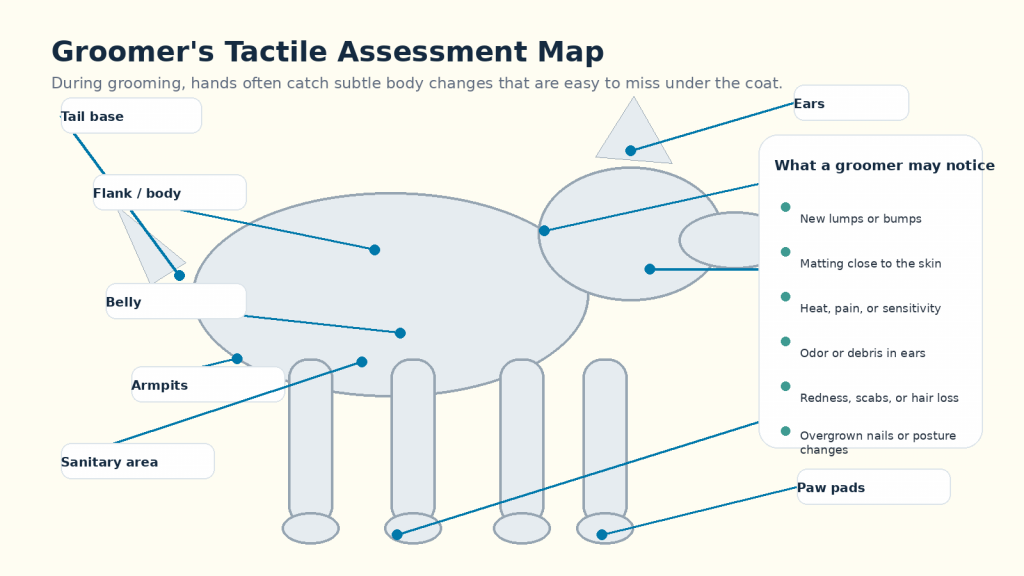
Figure 2. A groomer’s tactile assessment often covers body areas that pet owners do not routinely inspect closely.
What Groomers Often Notice First
The earliest signs of health problems are often subtle, localized, and easy to overlook. Groomers are uniquely positioned to notice them because grooming involves repeated, close-up handling of the same body zones over time, making change easier to spot.
Lumps and bumps under the coat
A slow pass with fingers while brushing often reveals more than casual petting. Sometimes it is a harmless fatty lump. Sometimes it is an inflamed cyst. Sometimes it is something that needs prompt veterinary evaluation. The point is not to guess. The point is to catch it.
Matting that is already hurting the skin
Mats are not just tangles. They tighten. They pull. They trap moisture, dirt, debris, and parasites. Once the skin underneath stays damp or irritated, you are not dealing with a cosmetic issue anymore.
Skin changes
Redness, flaking, scabs, hair thinning, bald spots, hotspots, discoloration, and drainage may first become obvious during a full grooming appointment.
Ear problems
Odor, wax buildup, redness, pain when touched, head shaking, or sensitivity around the ears can show up before a pet parent notices them at home.
Nail issues and posture changes
Long nails are not just noisy on the floor. They affect traction, change how a pet stands, and increase the chance of splits, tears, and discomfort.
Dental warning signs
A groomer is not performing a dental procedure, but foul odor, facial sensitivity, visible buildup, or swelling around the mouth can all be warning signs worth mentioning quickly.
Grooming Check vs. Vet Exam: What’s the Difference?
A grooming check and a veterinary exam are not the same service, but they work best together. Grooming offers frequent, hands-on external observation. Veterinary care provides diagnosis, testing, treatment, and medical decision-making. One supports early noticing. The other confirms what is happening and what to do next.
| Preventative Care Touchpoint | Primary Role | What It Can Catch | What It Cannot Do |
| Professional Grooming | Regular hands-on observation of coat, skin, ears, nails, paws, and body surface | Mats, parasites, skin irritation, odor, lumps, sensitivity, overgrown nails, and coat changes | Diagnose, prescribe, run tests, or medically treat disease |
| Veterinary Wellness Exam | Full medical assessment and prevention planning | Systemic disease, oral disease, tumors, heart or lung issues, lab abnormalities, parasite risk, and vaccination needs | Replace consistent coat and skin upkeep between visits |
| At-Home Checks | Daily familiarity and behavior monitoring | Appetite changes, limping, scratching, energy shifts, odor, and visible issues | Match a groomer’s consistency or a vet’s medical evaluation |
The best preventative plan uses all three. Groomer. Veterinarian. Owner. When these layers work together, your pet gets more eyes on them, more hands on them, and more chances to detect change before it becomes a crisis.
How Grooming Helps You Avoid Bigger, More Expensive Problems
The financial value of grooming is simple: small problems are usually cheaper, easier, and less stressful to handle than advanced ones. Preventative care lowers the odds that you will face a larger medical issue that could have been caught or reduced earlier.
At first, a mat looks like ‘just a tangle.’ Then it tightens. Then the skin underneath stays damp. Then irritation starts. Then infection. Then the pet resists being touched. Then sedation may be needed for safe removal and treatment. That is a much bigger bill than routine brushing and consistent coat maintenance.
Now think about a hidden lump. A groomer feels a small mass under the coat and tells the owner to book a vet visit. The vet checks it early. Maybe it is benign. Great. Maybe it needs monitoring. Fine. Maybe it needs removal before it grows, ulcerates, or becomes harder to manage. That early heads-up can prevent a more complex surgery later.
Nail care works the same way. Nails get skipped for months. The pet’s gait changes. A nail twists. A dewclaw catches. A nail tears. Now you are dealing with pain, bleeding, possible infection, and a frightened pet. Routine trims are far easier than urgent treatment after an injury.
Dental warning signs get ignored all the time because bad breath becomes ‘normal’ in the household. Meanwhile disease progresses. Routine grooming does not solve dental disease, but it can help flag the red flags sooner. And sooner usually means less suffering and often less cost too.
Real-World Grooming Scenarios That Show Why This Matters
Preventative care becomes real when you see how small observations change outcomes. Grooming professionals often notice subtle issues in ordinary appointments, long before those issues become dramatic enough for owners to catch on their own.
In my 15 years at the grooming table, I have personally spotted pea-sized lumps families had never noticed, tight mats hiding inflamed skin, ear odor that later turned out to be infection, nails so overgrown the dog’s stance had changed, and coat thinning that pushed owners to get a medical workup.
None of those appointments started as ‘medical’ appointments. They started as regular grooming visits. That is the point. Prevention does not always look dramatic. Sometimes it looks like a brush, a comb, a bath, a nail trim, and a groomer saying, ‘This is new.’
Common Myths About Preventative Pet Care
Preventative pet care is often misunderstood as vaccines only, or as something you do at the vet once a year. In reality, it is broader than that. It includes every routine action that helps reduce risk, detect change early, and keep your pet comfortable before a crisis develops.
Myth 1: Preventative care just means shots.
False. Vaccines matter, but so do parasite prevention, dental care, wellness exams, nutrition, weight management, and grooming. Preventative care is a system, not a single service.
Myth 2: Grooming is only cosmetic.
Also false. Grooming supports skin health, coat health, hygiene, comfort, and early detection. It is practical care, not fluff.
Myth 3: If my pet seems fine, they are fine.
Not necessarily. Pets often hide pain and illness well. A pet can look normal while a problem is developing quietly.
Myth 4: I will wait until the coat gets bad.
That is risky. Once matting is heavy, you are not talking about beauty anymore. You are talking about pain, trapped moisture, skin damage, and sometimes medical treatment.
Myth 5: Bad breath is normal.
It is common. That is different. Bad breath can be a sign that dental disease is already active.
How to Build a Preventative Pet Care Routine That Actually Works
A strong preventative routine is simple, consistent, and shared between you, your groomer, and your veterinarian. The goal is not perfection. The goal is regular monitoring, regular maintenance, and fast action when something changes.
Keep regular veterinary wellness visits on schedule.
This is non-negotiable. Even healthy pets need routine exams. Senior pets and pets with existing issues may need more frequent check-ins.
Book grooming on a consistent cadence.
Do not wait until the coat is unmanageable. Your pet’s ideal grooming schedule depends on coat type, breed, age, activity level, and health status. Consistency gives your groomer a baseline, and a baseline makes change easier to spot.
Do quick at-home checks between appointments.
Once a week is a great start. Feel through the body. Lift the ears. Look at the paws. Smell the mouth. Check under the collar. Notice scratching, odor, tenderness, or new lumps.
Treat grooming notes seriously.
If your groomer says, ‘Please have your vet look at this,’ do it. Do not panic, but do not brush it off either.
Stay proactive with dental care.
Dental disease is common, painful, and often hidden. Regular home care and professional veterinary guidance matter much more than most families realize.
Think long term, not visit to visit.
Preventative care is about trendlines. Is the lump new? Are the ears getting worse? Is the coat thinner than last season? Are nails overgrowing faster because mobility is changing? Patterns tell the story.
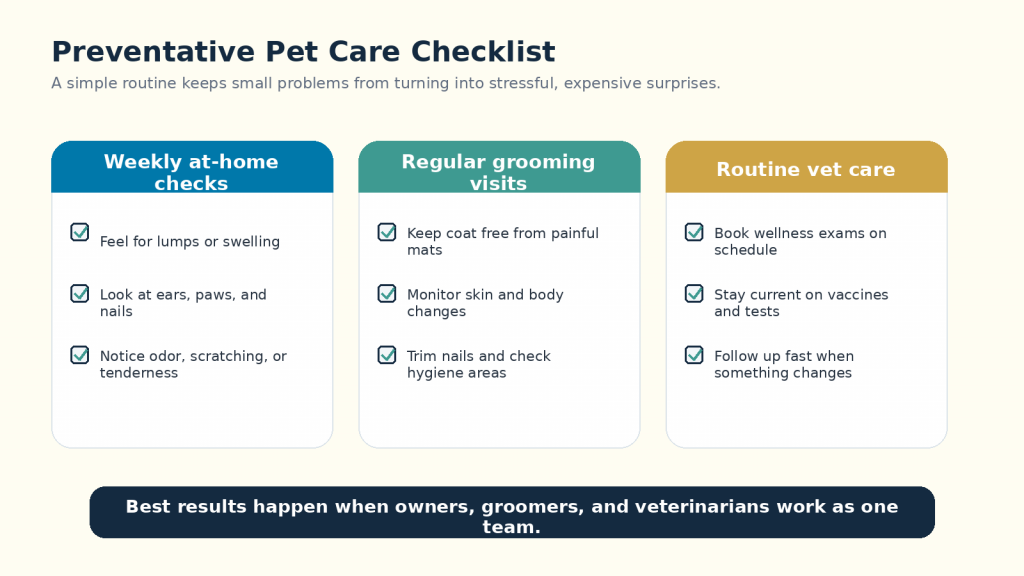
Figure 3. A simple prevention routine becomes much easier to maintain when owners, groomers, and veterinarians work as one team.
When Your Groomer Says, ‘Please See Your Vet’
A grooming referral is not a diagnosis. It is a signal that something looks, feels, or smells abnormal enough to deserve medical attention. The smartest response is calm action, not delay.
Call your vet promptly if your groomer mentions a new lump or swelling, a painful or highly sensitive area, redness or odor in the ears, severe matting with skin irritation underneath, bleeding, pus, open sores, sudden coat thinning, strong mouth odor with visible buildup, limping, stiffness, or distress during handling.
This is exactly how preventative care is supposed to work. Someone notices. You follow up. The problem gets addressed earlier. That is a win.
The Bottom Line
Preventative pet care is about catching problems early, reducing risk, and keeping your pet healthier, more comfortable, and less likely to need major intervention later. Grooming belongs in that conversation because it gives your pet repeated, hands-on health observations that owners and even annual exams alone cannot fully replace.
If you only remember one thing from this article, remember this: grooming is not extra. It is part of the plan.
It helps you notice what fur hides. It helps you act before pain gets worse. It helps you avoid ‘we had no idea’ moments. And yes, it can help you avoid bigger bills too.
At Well Groomed Pets, we do not see grooming as vanity. We see it as vigilance. We see it as comfort. We see it as a partnership. We see it as prevention.
| Ready to make grooming part of your preventative pet care plan? Book your next appointment with Well Groomed Pets today and give your pet one more layer of protection, comfort, and early detection. Because the best time to catch a problem is before it becomes one. |